RDIMM vs UDIMM
🧠 Memory Guide • Server & Workstation
ECC Registered (RDIMM) vs ECC Unbuffered (UDIMM)
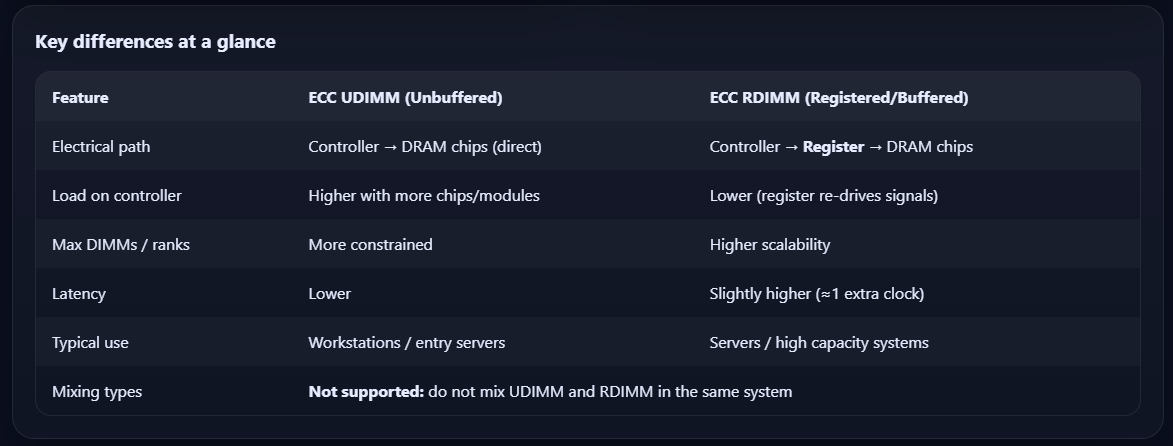
RDIMM and UDIMM are different types of memory modules. RDIMM uses a register to buffer command and address signals and is commonly used in servers, while UDIMM communicates directly with the memory controller and is commonly used in desktops and entry-level workstations.
RDIMM and UDIMM cannot be mixed in the same system.
RDIMM vs UDIMM: At a Glance
- RDIMM
Registered: Yes
ECC available: Yes
Common use: Enterprise servers & workstations
Memory scalability: Higher
Signal buffering: Registered / buffered
Enterprise server use: Very common
- UDIMM
Registered: No
ECC available: Yes/No, depending on module
Common use: PCs & entry-level workstations
Memory scalability: Lower
Signal buffering: Unbuffered
Enterprise server use: Limited
Can RDIMM and UDIMM be mixed?
No. RDIMM and UDIMM cannot be mixed in the same system. They use different memory architectures, and a server or workstation motherboard will typically support one memory type or the other.
Physical differences you can spot
- Extra chip on RDIMM: the register (often centered). UDIMM lacks it.
- More DRAM packages possible on RDIMM without overloading the controller.
- Labeling: look for “RDIMM / Registered / R‑ECC” vs “UDIMM / Unbuffered / U‑ECC”.
- Look for the letter "R" in RDIMM and the letter "U" for UDIMM.
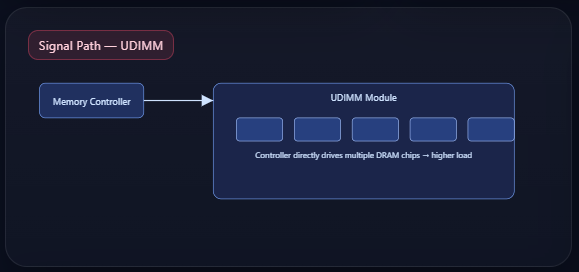
UDIMM (ECC Unbuffered)
Best for low‑to‑mid capacities
- Lower latency (no register stage)
- Lower cost, simpler design
- Electrical load increases with more chips/modules
- Common in workstations / entry servers
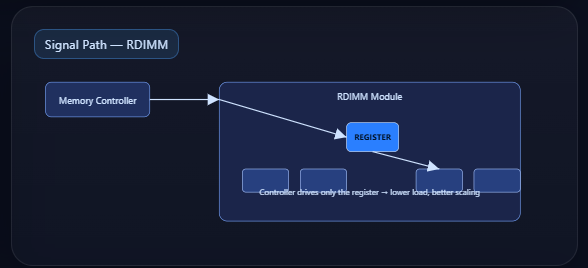
RDIMM (ECC Registered/Buffered)
Best for scaling up
- Register chip buffers command/address signals
- Reduces load on the memory controller → supports more DIMMs/ranks
- Small latency penalty (≈ one extra clock)
- Standard in servers and high‑capacity systems
Why a UDIMM motherboard can’t read RDIMM
UDIMM board expects… Unbuffered
- ✓ Direct drive to DRAM chips (no register present)
- ✓ Timing and training tuned for direct path
- ✓ Simpler SPD / wiring assumptions
RDIMM actually has… Buffered
- ✗ A register between controller & chips → signals don’t match expectations
- ✗ Different training/latency model (extra stage)
- ✗ Different electrical loading & SPD flags → firmware rejects it